How I Baked 150 Loaves of Rye for Expats in Cyprus. They Sold Out in an Hour, and We Never Opened the Bakery.
⚠️ 🌐 Machine translation (claude-sonnet-5-5) of the original article, reviewed for meaning. Check it, then send it for review.
How a Baker Came to Cyprus
The heat in November was overwhelming. At half past three in the afternoon it was +30. Back home it was +5. I was in a sweater, jeans and sneakers, and sweat was running down my back.
The bakery stood in a mountain village, across the road from the house where they had put me up. In fact, it turned out to be a bread factory. The workshop was huge: steel tables, rows of trolleys, mixers in the corners, a deck oven and three rotary ovens. They used to work here almost around the clock, but now only from 8 to 16.
— Bread was baked here for sixty years. By the tonne, — said the manager, Feodor.
The next morning I walked around the workshop with a notebook: I counted trolleys, baking trays, mixing and baking times. By four in the afternoon, I had worked out a little over a tonne.
— How much did you bake before? — Four tonnes a day. Now one.
He said it without bitterness, the way people talk about the weather. The former owner had retired, the mills had raised their prices, and the bread had changed. Customers complained about the main product, the village bread: dense, heavy, and it went stale quickly.
How a Recipe That Didn't Exist Appeared
I asked for the village bread recipe. The manager rummaged in a drawer for a long time and handed me a tattered piece of paper. At the top, "1 pc.", then eight ingredients in grams. No title.
— Is that all? — The rest is in his head. — Whose? — The head baker's.
The head baker looked at me as if I had asked where in the bakery the air was kept. In ten years he had gone from cleaner to head baker, and he simply baked bread. Without any technology cards.
In my notebook I wrote: "Here the recipe is a person." And added: "A person can fall ill, go on vacation, quit." Bread for dozens of stores depended on a scrap of paper and on one baker.
I put on an apron and worked as his helper for a whole shift. I introduced one rule: weigh everything. After three days of questions and trial batches, everything fell into place. The recipe had been changed at random for years, and nothing was left of the technology.
The final bake was done in the evening. The bread came out the color of red gold, with a thin, ringing crust. The baker smelled the loaf, cut off a slice, tasted it and said: "Good". Coming from him, that was applause.
How the Stolichny Got Its Cap
On Wednesdays the manager became a baker himself and baked eighty loaves of semi-rye "Stolichny". For his own pleasure. Nobody asked him to. It was bread from his old life.
It came out differently each time, and before I arrived the top of the loaf had started to sink in the oven, as if someone had flattened it. We went through the whole process step by step and found the culprit: when shaping, the manager himself pressed down on the dough. He thought it was better that way. We corrected the proportions and the mixing, and shaped the cap right in the pan.
In the evening there were eighty beauties with perfect caps on the trolley. The manager, whose name was Feodor, looked at them lovingly.
How I Made Russian Rye and More
I was brought in for the rye bread. Rye doesn't grow in Cyprus. It is imported, and local mills blend it with other flour. Far from every bread called rye actually is.
For a week I went through everything in the warehouse and at the local mills. The bread came out dense, good for little besides rusks. I found the right flour in a locked storeroom at Feodor's, where nobody had looked. In the same place, a couple of weeks later, I found a sack of malt bought two years earlier, when the rye was first being planned. There was no molasses on the island at all, so I had to come up with a substitute.
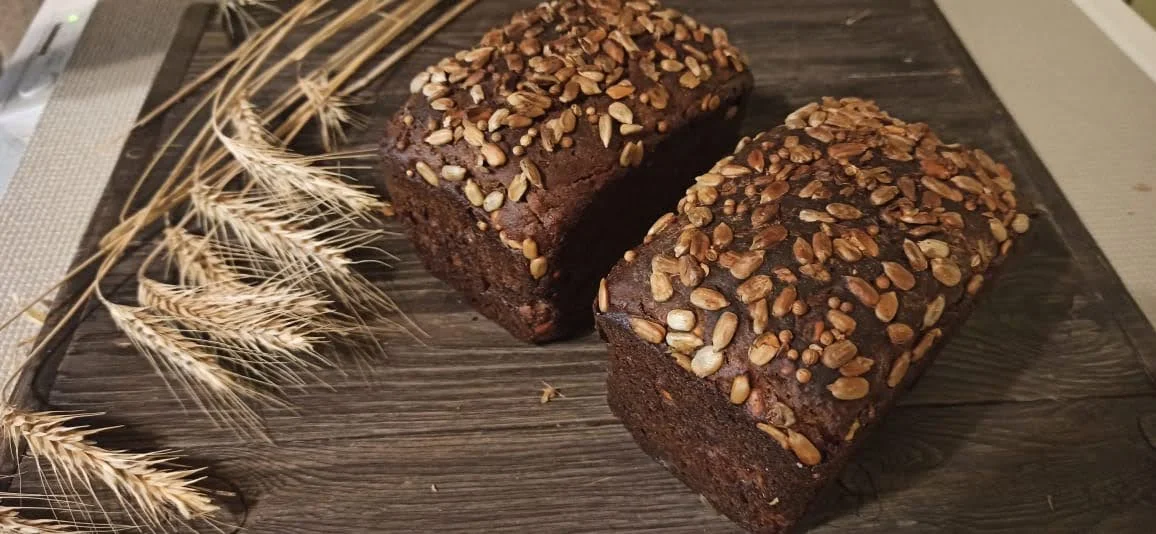
After that it went like a construction set. One base: you change the proportions of flour, the sweet additions and the spices, and the bread changes character. That is how Darnitsky, Uralsky, Lyubitelsky, Moskovsky and, as the crowning piece, Borodinsky appeared one after another. One base, five breads.
The local bakers looked at the black loaves in bewilderment:
— Why? They're ugly and not tasty.
For them bread was only white. Black looked burnt.
At the same time, without being asked, I baked what the owner had once mentioned in conversation: pita, ciabatta, focaccia, milk bread and potato bread. A technologist's best portfolio is bread on the table. The owner appreciated it, and that decided a lot later on.
How the Baker Went to the Celebration
What remained was a trial sale of the rye. By the way, the owner had received an invitation to a celebration: 12 December, Constitution Day, the Russian House in Nicosia.
We decided to bring the "golden trio" of rye — Stolichny, Borodinsky, Darnitsky — and three white bestsellers: brioche, milk bread and potato bread. 120 loaves of black and 30 of white. Everything had to be baked in half a day, so we could be in Nicosia by six in the evening.
There were some funny mishaps. I mixed the dough for the potato bread without the potatoes: I noticed the bowl of mash when the dough was already rising. And for the Stolichny, fifteen dough pieces were suddenly missing. We found them at the bottom of the dough tub, stuck together in one lump. It was no laughing matter then; we laughed on the way home.
At the Russian House they gave us a table in the corner. Guests came up, tasted and asked:
— Do you bake this yourselves? — And is this Borodinsky? A real one? — Made with sourdough? Definitely sourdough?
In an hour the bread was gone. All of it. To the great displeasure of the guests:
— What do you mean, gone?! Why did you bake so little? — Give us an address where we can come for bread. — Can we place orders with you?
A choir was singing on stage. And our souls were singing.
How the Bakery Never Launched the Rye
A few days later I flew out. On the way to the airport Feodor said something I remembered:
— Look, we can't work only for expats. That's just 2–3% of the market. And we have a factory. We have to make four tonnes to survive.
And he was right. A factory built for four tonnes has no interest in a small market. The rye bread never went into production, although calls and orders kept coming in after the celebration.
I was sorry: in my heart I felt people's huge interest in the bread of their homeland.
The continuation of my stories about bread, bakeries and baking technology is in my Telegram channel:
🌐 Machine translation (claude-sonnet-5-5) of the original article, reviewed for meaning.
Comments (0)
Log in to comment.